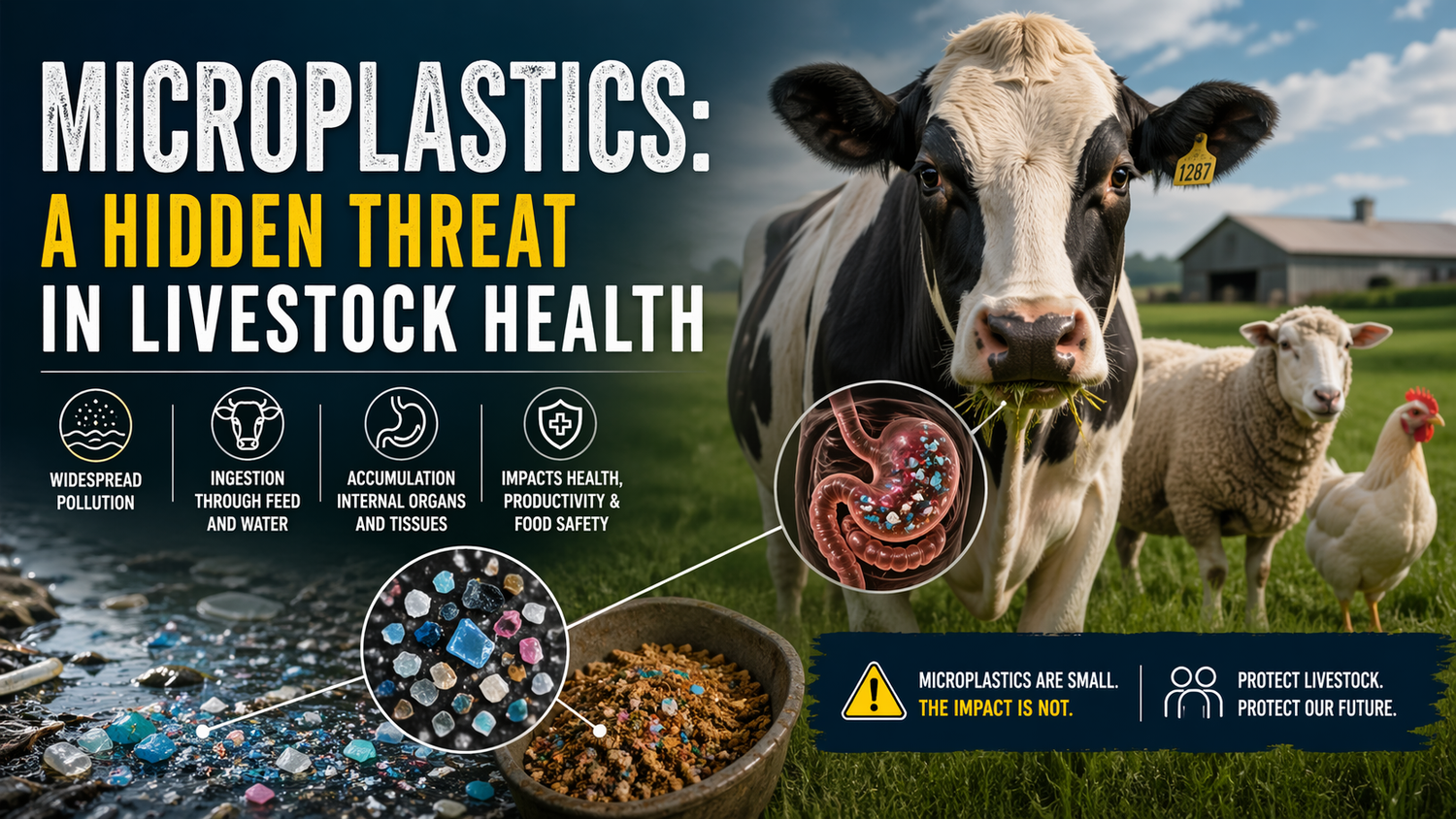
Plastic pollution is often thought of as an environmental issue, but its effects can reach much closer to home — all the way to the barn, the feed bunk, and the water trough. As plastic materials break down into tiny particles called microplastics, they can enter the same systems livestock depend on every day.
For cattle, calves, pigs, chickens, and other food-producing animals, that creates a new and growing concern. Microplastics are difficult to see, difficult to remove, and increasingly difficult to ignore.
What are Microplastics?
Microplastics are very small plastic particles, usually less than 5 millimeters in size. They can form when larger plastic items break down over time, or they can be created at a small size from the start.
Because they are so small, microplastics can move through water, soil, air, and feed ingredients with ease. Once they enter a farm environment, they can spread in ways that are not always visible to the naked eye.
How Livestock is Exposed
Livestock can encounter microplastics in a number of everyday ways:
- Feed contamination. Plastic particles can enter feed ingredients during production, storage, transport, or handling.
- Water sources. Microplastics may be present in surface water, runoff, or other water supplies animals drink.
- Soil and bedding. Particles can accumulate in the places animals are housed, raised, or grazed.
- Dust and air. In barns and production facilities, small plastic particles may be present in dust or suspended in the air.
- Farm materials. Plastic wrap, bags, containers, and equipment can all contribute to environmental contamination over time.
Because livestock systems are connected to the surrounding environment, exposure can happen in more than one place and may continue over time.
Why Microplastics Matter for Animal Health
Researchers are still learning how microplastics affect livestock, but the concern is growing. One possible effect is physical irritation when particles are swallowed and move through the digestive tract. Another is inflammation, as the body responds to the particles as foreign material.
Scientists are also studying whether microplastics contribute to oxidative stress, a form of cellular strain that can affect normal body function. In some cases, microplastics may also interact with other contaminants in the environment, creating a more complex exposure picture.
The impact may depend on particle size, shape, concentration, and how long animals are exposed. While there is still much to learn, the issue is important because livestock may encounter these particles as part of daily production conditions.
Why it Matters Across Livestock Species
Microplastics are not limited to one type of animal. They may affect:
- Dairy and beef cattle, through feed, water, pasture, bedding, and housing environments.
- Calves, which may be more sensitive because they are still developing.
- Swine, through feed ingredients, barn dust, water, and facility materials.
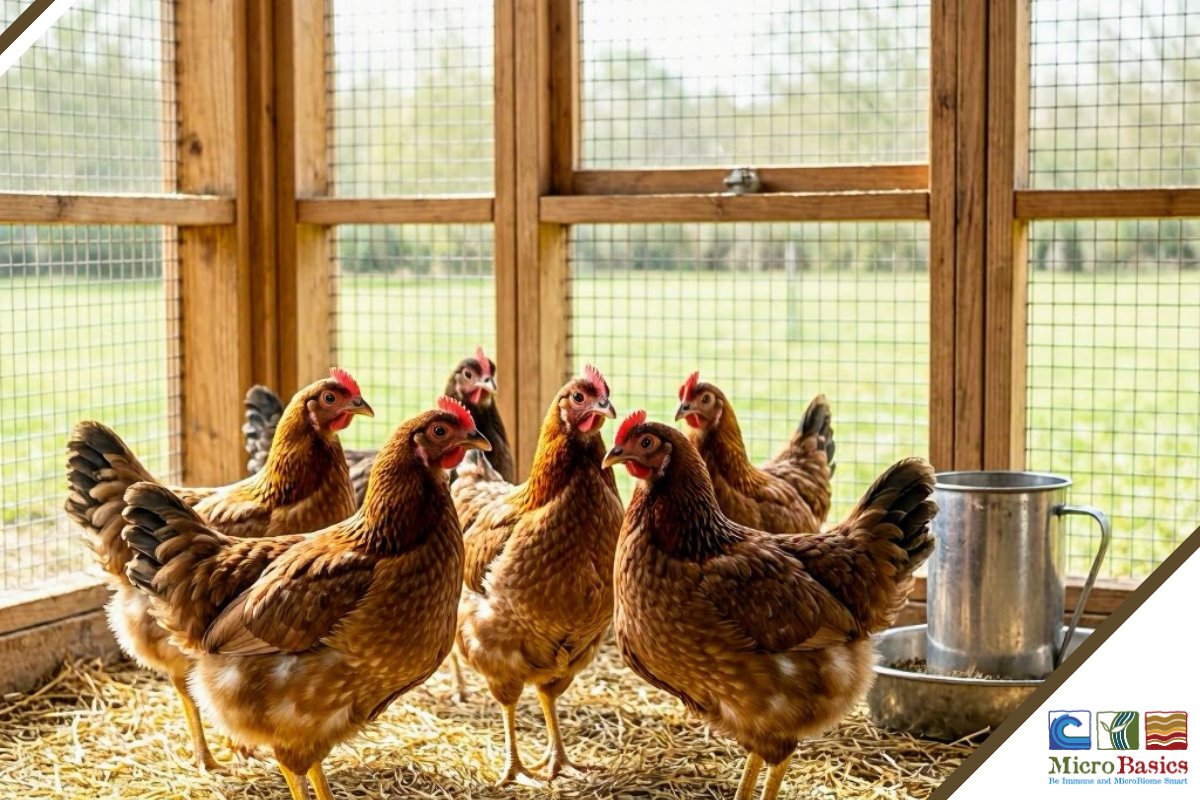
- Poultry, through litter, feed, dust, and housing conditions.
In each case, the concern is the same: if microplastics are present in the environment, animals may be exposed repeatedly over time.
Why Prevention Matters
One of the biggest challenges with microplastics is that exposure is often unintentional. Producers may not see the particles, and animals cannot avoid them on their own. That makes prevention and environmental management especially important.
Reducing plastic pollution before it enters livestock environments can help lower the chance of contamination in feed, water, soil, and housing systems. However, the issue is not always addressed before microplastics reach the farm. Once our farm environment is contaminated, we have to address the problem at the animal level.
Where Intercept FEND Fits In
Intercept FEND is a multi-modal feed additive that targets biotoxins, PFAS, and microplastics while supporting gut and immune health. Intercept FEND works through physical binding and support of biological mechanisms to promote animal health and wellbeing. This advanced toxin binder can help to manage microplastic pollution at the animal level by binding up the microplastics in the feed and reducing the burden placed on animal heath.
Clean feed equals clean food for the consumer, and that matters for producers who want to be progressive in our modern livestock marketplace. Using a natural strategy like Intercept FEND not only binds up harmful particles but also strengthens the animal’s immune system and improves overall farm productivity.
Looking at the Bigger Picture
Microplastics deserve attention alongside other feed and environmental concerns. They are more than a pollution problem. They are becoming a human and animal health issue, too.
The challenge is not just that plastic waste exists, but that it breaks down into particles small enough to move through everyday farm systems. Once that happens, the contamination can be difficult to control.
Sources
- Harmful effects of microplastic pollution on animal health, PMC. https://pmc.ncbi.nlm.nih.gov/articles/PMC9205308/
- Animal exposure to microplastics and health effects: A review, ScienceDirect. https://www.sciencedirect.com/science/article/pii/S2405665024000702
- Microplastics in terrestrial domestic animals and human health, PMC. https://pmc.ncbi.nlm.nih.gov/articles/PMC9951732/
- What animals are teaching us about the hidden dangers of microplastics, Understanding Animal Research. https://www.understandinganimalresearch.org.uk/news/what-animals-are-teaching-us-about-the-hidden-dangers-of-microplastics
- Wildlife ingestion of microplastics, Canadian Wildlife Health Cooperative. https://www.cwhc-rcsf.ca/docs/fact_sheets/Wildlife%20ingestion%20of%20microplastics.pdf

Leave a comment
All comments are moderated before being published.
This site is protected by hCaptcha and the hCaptcha Privacy Policy and Terms of Service apply.