
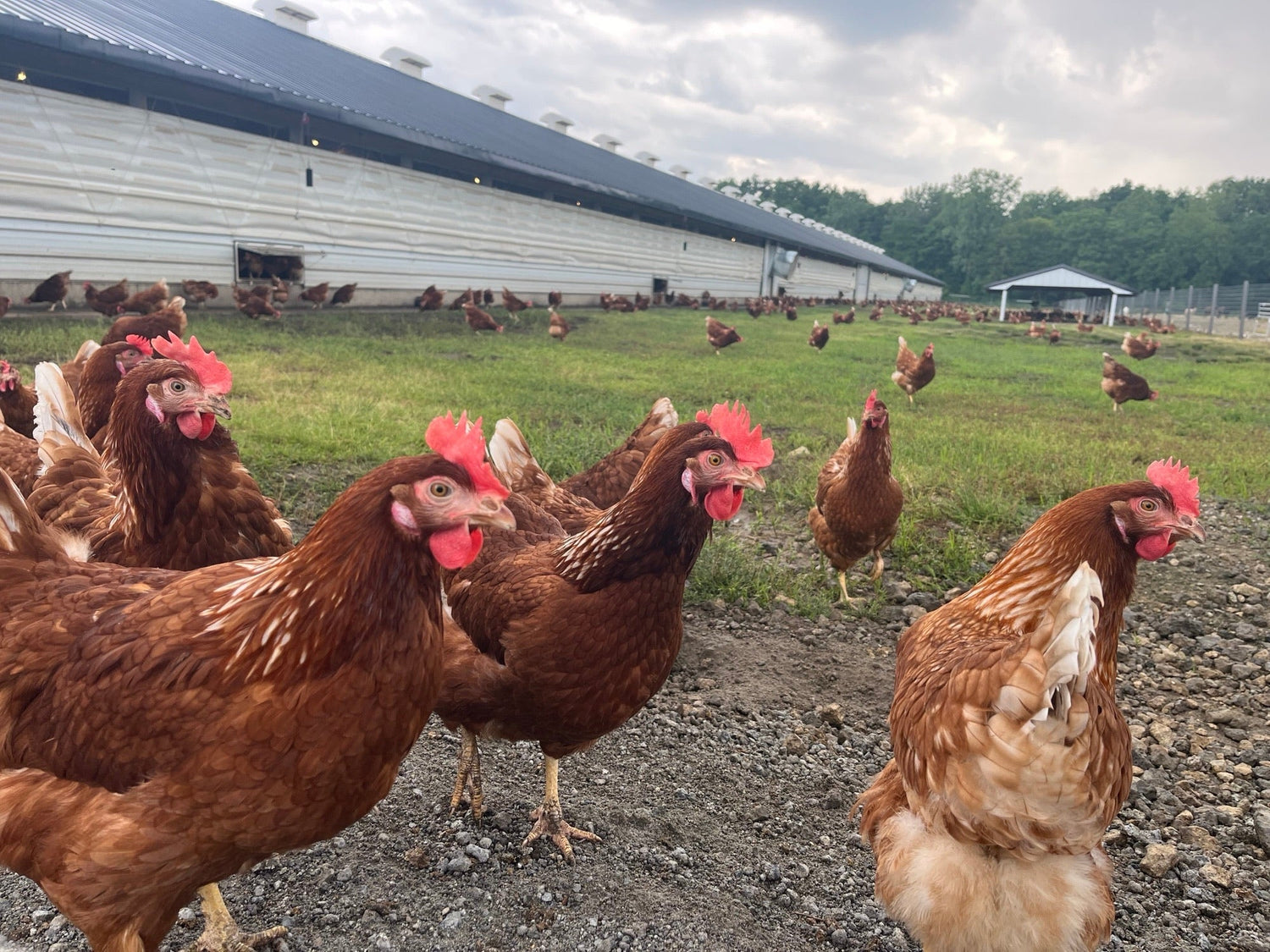
I spend most of my time focusing on ruminant nutrition, however, occasionally I get to change it up a little bit and highlight other species. This time we will be taking a peek into the poultry industry! As you read along you may notice there are some drastic differences between raising poultry and cattle, but there are also many similarities.
Dr. Alex Strauch from Four Star Veterinary Service gives us a glimpse of the poultry industry, challenges they face, and recommendations for poultry growers to keep their flocks healthy and efficient!
Real-world experience is the best teacher.
Dr. Strauch has a decade worth of experience in live production within the U.S. poultry industry. He claims that has been his most valuable education. His formal training (DVM from Michigan State University and an MBA) provided a basis for learning to begin, but he attributes hands-on work to his greatest learning experiences and the alignment of animal health and business performance.
Dr. Strauch is motived by large-scale impact. He chose poultry medicine to fulfill his desire to "do medicine for the masses" and “maximize impact on the food system”. The bulk of his clients are large egg and poultry producers across 20 different U.S. states, but he also does some work with hatcheries, turkeys, and game bird operations.
He is passionate about his work, which has led to large contributions to the historic transition to cage-free and alternative systems. Dr. Strauch has most definitely found his niche and describes his work not as a job but as a personal obsession. Here is what he has to say about challenges, solutions, and opportunities within the poultry industry.
Q: What are some modern-day poultry health challenges?
A:
· Alternative housing systems heighten health risks.
Cage-free and outdoor-access systems have a "lower forgiveness factor," increasing exposure to pathogens (e.g., E. coli) and reviving older diseases due to environmental contact with soil, vegetation, etc. This demands a proactive, preventative approach rather than a reactive one.
· Spotty Liver Disease ("Muddy Puddle Disease") is a significant threat.
Caused by Campylobacter hepaticus, it poses high risk for birds with outdoor access, especially in warm, wet climates with stagnant water. Prevention is paramount: a two-dose autogenous vaccine for pullets is the most effective tool. Additional measures include eliminating standing water, reducing housing temperature to 55 degrees Fahrenheit, and maintaining rigorous water line sanitation.
· Avian Metapneumovirus (AMPV): the great amplifier.
AMPV has become widespread in the U.S. over the past three years. This pathogen can really show you where your holes are in your management and health programs. While some flocks cope, it can trigger severe outbreaks, reduce egg production, and result in mortality when comorbidities exist (poor ventilation, high E. coli loads).
· E. coli is a persistent opportunist.
E. coli commonly acts as a secondary infection that "loves to join the party" during outbreaks. Any disease response must include strategies to mitigate E. coli, which complicates recovery and worsens outcomes.
Q:What industry solutions and opportunities do you see?
A:
· Continuous water line sanitation is essential.
Water is the most rate-limiting nutrient, and farms using continuous sanitation (e.g., chlorine dioxide systems) perform far better during outbreaks. Dr. Strauch is elated by broader adoption of these systems to keep the common water source clean, which is critical for flock health.
· Digital transformation of flock data is a major differentiator.
Operations with real-time, digital data systems are "light years ahead" of those relying on paper or simple spreadsheets. Benefits include superior data correlation, metadata for comparisons, and faster responses—leading to better case outcomes. The gap between adopters and non-adopters is stark.
· Preventative, collaborative veterinary partnerships deliver better results.
Treating the veterinarian as a management and health partner, rather than an "ambulance service", produces superior outcomes. This proactive model enables deeper collaboration, continuous data surveillance, and a focus on prevention instead of constant firefighting.
Q: What can you tell us about the current Avian Influenza (Bird Flu) situation?
A: Bird flu remains a constant, serious threat. Despite lower current case counts, bird flu continues to cause devastating commercial outbreaks. The key takeaway: broaden biosecurity protocols.
Dairy strains of the virus entering poultry farms revealed a new transmission pathway. Experience with the dairy strain has driven biosecurity evolution. Some companies now prohibit contact not only with other poultry but also with swine and cattle for a set period before personnel can enter poultry facilities—protecting valuable flocks through prevention.
Dr. Strauch urges farms to expand biosecurity protocols to include cattle-exclusionary clauses for employees, visitors, and contractors to prevent cross-species transmission.
Conclusion
The modern U.S. poultry industry is undergoing major transformations driven by shifts to alternative housing, emerging disease challenges, and technological advances. Dr. Strauch has played a major role in orchestrating many of the changes in management that have influenced proactive, preventative, data-driven flock health.
Dr. Strauch, we appreciate you sharing your experiences with us and your dedication to producing high-quality protein within our food system!
Written by: Mariah Gull, M.S.


Leave a comment
All comments are moderated before being published.
This site is protected by hCaptcha and the hCaptcha Privacy Policy and Terms of Service apply.