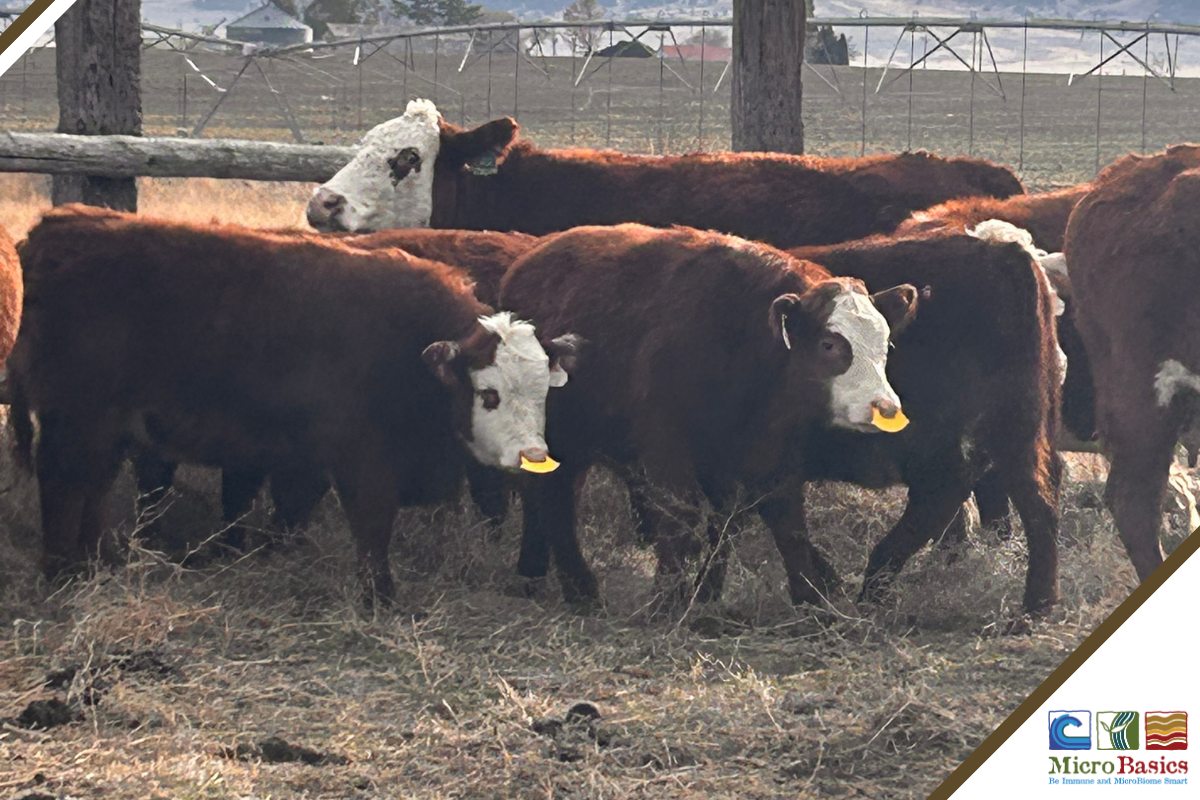
The calves have been weaned, transported, and unloaded in their new home. They have been placed in a group with other cattle their same size and weight. Now they are all nestled in their new pen. The trailer has pulled away; food and water are available. The stress is over, but that does not necessarily mean the animal has fully recovered.
Whether we are talking about this group of recently weaned calves that just entered the feedlot, or a cow after parturition, the concept is the same. Stress can affect more than behavior: it can alter hormone signaling, immune activity, intestinal barrier function, and the way nutrients are used.
Those changes help explain why the recovery period deserves as much attention as the stressful event itself. It is impossible to eliminate the stress, but that is not really our end goal anyway. Animals need to adapt to survive, our goal is resilience: helping the stress response activate appropriately, then settle back into homeostasis as the challenge passes.
The HPA Axis: The Animal's Stress Communication Network
The hypothalamic–pituitary–adrenal axis, or HPA axis, connects the brain with the adrenal glands through a series of hormonal messages. It helps coordinate the animal's response to challenges such as handling, transportation, environmental extremes, and other threats to normal physiological balance.
The pathway follows three main steps:
1. The brain perceives a stressor and the hypothalamus releases corticotropin-releasing hormone, or CRH. Additionally, Vasopressin also contributes to this signaling.
2. The pituitary gland responds by releasing adrenocorticotropic hormone, or ACTH, into the bloodstream.
3. ACTH stimulates the adrenal cortex to release glucocorticoids—primarily cortisol in cattle.
Cortisol helps coordinate the metabolic adjustments needed to cope with the challenge. It also participates in feedback regulation (signals returning to the brain and pituitary help limit further activation of the system). This feedback is part of how the body maintains, and eventually restores, internal balance.
The Nervous System: The Immediate Responder
The sympathetic nervous system activates a faster response involving the sympatho-adrenal system. The HPA and synpatho-adrenal pathways work together, they are not interchangeable. Sympathetic activation—not simply increased cortisol—can contribute to stress-related changes in immune function. In other words, cortisol is just one piece of the stress response.
Stress, Inflammation, and Immunity Are Connected
A short-lived stress response is not automatically harmful. The difficulty comes when a challenge is severe, prolonged, or repeatedly renewed before the animal has recovered.
The brain and immune system communicate in both directions. Stress-related hormones and nervous-system activity influence immune cells, while inflammatory signals—including proinflammatory cytokines—can influence HPA activity. This means the animal's stress response reflects not only what is happening around it, but also influenced by the animal's age, physiological state, and previous experiences.
An effective immune response needs inflammation to respond to infection or injury. But prolonged or poorly controlled inflammation can result in poor health, growth, reproduction, and production. The practical objective is a well-regulated response: enough defense to address the challenge, followed by resolution and tissue recovery.
The Gut Can Keep the Stress Conversation Going
The gastrointestinal tract is more than a digestive system. Its lining forms a barrier between material inside the gut and the animalʼs internal tissues. A recent livestock review compiled by the USDA Agriculture Research Service describes how heat stress, transportation, handling, and social stress can affect this barrier through neuroendocrine, immune, and oxidative pathways.
When permeability increases, microbial components can cross the barrier and contribute to inflammatory signaling. That creates a potential cycle:
1. Stress changes nervous-system and hormonal signaling.
2. Those changes can weaken intestinal barrier function.
3. Increased exposure to microbial components stimulates inflammation.
4. Inflammatory signals can contribute to continued activation of stress-response pathways.
Not every stressed animal develops the same degree of intestinal disruption. Nevertheless, the connection explains why gut support belongs in a recovery plan—and why improving the environment can be as important as changing the ration.
Can We “Repair” Communication With the HPA Axis?
“Repairing communication” is a useful way to picture recovery, but it needs a scientific qualification. The HPA axis is not a broken wire that can be reconnected with a supplement. A more accurate goal is to support normal regulation: appropriate activation, effective feedback, and a return toward the animal's usual physiological state.
There is not one universal feed additive that resets the HPA axis after a stressful event. Research evidence supports a broader approach that removes continuing challenges and supports the systems interacting with the stress response.
1. Stop renewing the stress signal: recovery begins with the conditions around the animal. Prioritize a comfortable environment, consistent access to clean water and feed, and reduced competition. Where practical, avoid adding unnecessary handling, regrouping, or abrupt diet changes during the recovery period. Ensure employees are well trained in all these areas, they are the key to getting all of this to happen.
2. Address disease, pain, and dehydration: an animal that is still ill or uncomfortable is still facing a physiological challenge. Because HPA activity and immune signaling interact, persistent poor appetite, abnormal behavior, respiratory signs, diarrhea, or failure to recover should all be red flags that are addressed rather than dismissed. Train employees to be able to identify behaviors that might indicate an animal is not feeling well. If you need help with this, please visit a previous blog series of mine: 6 signs of calf wellness.
3. Restore intake and nutritional consistency: nutrition should support recovery, not introduce another disruption. Work with the herd nutritionist to maintain an age-appropriate, balanced feeding program and identify why intake has fallen. Consistent feeding and gradual dietary transitions are especially important when gastrointestinal function is already under pressure. Abrupt dietary changes and disturbed fermentation can contribute to barrier dysfunction and inflammation.
4. Support the gut with a specific objective: porobiotics, prebiotics, postbiotics, selected amino acids, minerals, and phytochemicals have and are being investigated for their ability to support intestinal barrier resilience and immune regulation in livestock. Their mechanisms and evidence differ, so they should not be treated as one interchangeable category of “gut health products.” Work with the herd nutritionist to determine which products will have the highest return on investment.
5. Feed additives to complement recovery: Adaptogens and Herbal Feed Additives have attracted attention because they are proposed to improve an animal's ability to cope with challenges. Herbal extracts may contain compounds with antioxidant, antimicrobial, and anti-inflammatory activities, and some can affect digestion or rumen microbial activity. Again, work with the herd nutritionist to determine which additives might bring the most benefit to your feeding program. A little support on the front end may prevent a costly health event.
Summary
When we integrate physiological information with behavior, production, and health records we can have a better perception of HPA function in our livestock animals. Solid management practices and enhanced nutrition programs can help us to accomplish our goals of reducing stress and improving health and performance.
MicroBasics is committed to formulating supplements that encourage feed intake, support an appropriate immune response, improve feed digestibility and nutrient absorption to aid the animal during immune activation and into the recovery phase. Check them out in our online store!
Written by: Mariah Gull, M.S.

Leave a comment
All comments are moderated before being published.
This site is protected by hCaptcha and the hCaptcha Privacy Policy and Terms of Service apply.