
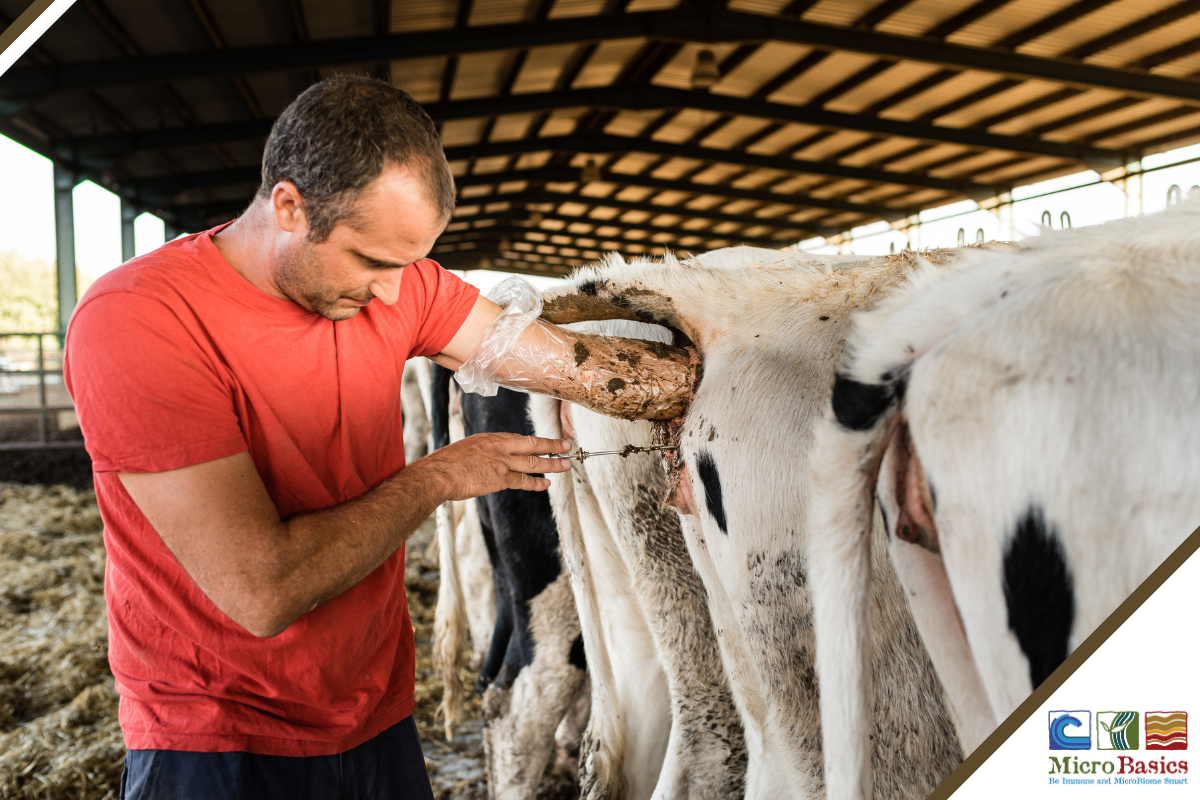
When we talk about reproductive efficiency in dairy cattle, typically the focus is placed on lactating cows. But there is another group that deserves just as much attention: the replacement heifer.
Heifer rearing costs are the second highest costs on the farm and represent a significant investment in feed, labor, facilities, and time before they ever produce their first pound of milk. Every additional day they spend in the replacement program adds to that investment. That makes reproductive efficiency more than a fertility issue. It is an economic issue.
Heifer Conception Rates Are Moving in the Wrong Direction
Data presented at the 2026 DCHA Pre-conference session showed an interesting comparison in reproductive performance between lactating cows and heifers.
Data from Cornell, representing approximately 1 million lactating cows and 1.5–1.8 million heifers, showed that while conception rates in lactating cows have improved over time, heifer conception rates have moved in the opposite direction.
Heifer conception rates have declined from approximately 58% to 52–53%. This decline is not only a result of using sexed semen but is thought to be caused by a variety of management factors.
The data doesn't mean today's heifers are necessarily reproductively poor. A conception rate in the low-50% range can still represent acceptable reproductive performance, but the downward trend is concerning.
If the industry has improved reproductive management in lactating cows while heifer conception has gradually declined, we should be asking an important question: Are we giving our heifers the same level of management and attention that we give our cows?
Heifer Reproduction Can Be Easy to Overlook
Heifers often seem like the easy group to manage. They aren't producing milk. Their nutritional requirements are relatively modest compared with high-producing cows. They don't have the same transition-period challenges. And, in many operations, they require less daily management. It is easy to unintentionally push reproductive management lower on the priority list, but there is a hidden cost to that approach.
A heifer doesn't stop costing money just because she isn't difficult to manage. Feed and labor make up a large portion of the cost of raising a replacement. Every extra day a heifer remains in the rearing program means another day of accumulated costs.
Days on Feed Matter
The life of a dairy heifer can be divided into several stages:
Pre-weaning → Growing → Breeding → Gestation → First lactation
We have opportunities to influence how efficiently a heifer moves through each stage.
Nutrition can help accelerate the time in which it takes a heifer to reach the appropriate breeding size and weight. However, gestation has a fixed length. That means one of our greatest opportunities to reduce the total time and cost of raising a replacement is to get her pregnant efficiently once she reaches the breeding program.
Waiting for Heats is Problematic
One traditional approach to heifer breeding is to use limited hormonal intervention and rely heavily on visual estrus detection. This approach seems simple, wait for the heifer to show heat then breed her. Repeat the process with the next heifer.
The problem is this can create a very wide breeding window. The result is a long tail of late-bred heifers. One heifer being bred late may not seem significant, but when dozens or hundreds of heifers are each pushed farther down the timeline, the economic impact adds up. The goal should be to get every eligible heifer serviced within a defined breeding window.
Give Heifers a Breeding Deadline
One of the strongest takeaways from this presentation was the value of establishing a predetermined first-service deadline. This approach dramatically reduces variation in age at first service.
This strategy also provides a second benefit: heifers that aren't cycling become easier to identify. A firm breeding deadline creates a management checkpoint. If a heifer reaches that point without showing evidence of reproductive activity, she can be evaluated and culled sooner rather than later.
Synchronization Isn't About Replacing Good Management
Synchronization protocols aren't necessarily about eliminating observation or management. They're about creating a system that makes reproductive performance more predictable.
Several options include:
· Five-day Co-Synch
· Modified Pre-Synch/Ovsynch protocols
· MGA as an option for synchronization
· Activity monitoring systems to assist with heat detection
The specific protocol needs to fit the farm's management system, labor, facilities, and resources.
Don't Just Measure Pregnancy Rate
Reproductive efficiency is the result of many pieces working together:
Heifer development + cycling status + heat detection + synchronization + timing + semen + insemination management + follow-up pregnancy management
If we want to improve reproductive efficiency, we need to look beyond conception rate.
Consider tracking:
· Age at first service
· Age at pregnancy
· Age at first calving
· First-service conception rate
· Overall conception rate
· Service rate
· Percentage of eligible heifers serviced by the breeding deadline
· Percentage of heifers requiring additional services
· Number of heifers becoming late-bred
· Days on feed
These measurements tell us different parts of the story.
Pregnancy Has a Timeline
Raising a dairy replacement is a long-term investment.
We spend months providing feed, labor, housing, health care, and management before that animal generates her first dollar of milk revenue. And then it takes 1.5-2 lactations to pay back these investment costs. That makes every unnecessary day in the replacement program expensive.
Work with your nutritionist, veterinarian, and semen rep to establish an efficient heifer breeding program for your farm.
Written by: Mariah Gull, M.S.
Source: 2026 DCHA Presentation by Douglas Duhatschek and Thiago Cunma, Parnell Living Science

Leave a comment
All comments are moderated before being published.
This site is protected by hCaptcha and the hCaptcha Privacy Policy and Terms of Service apply.