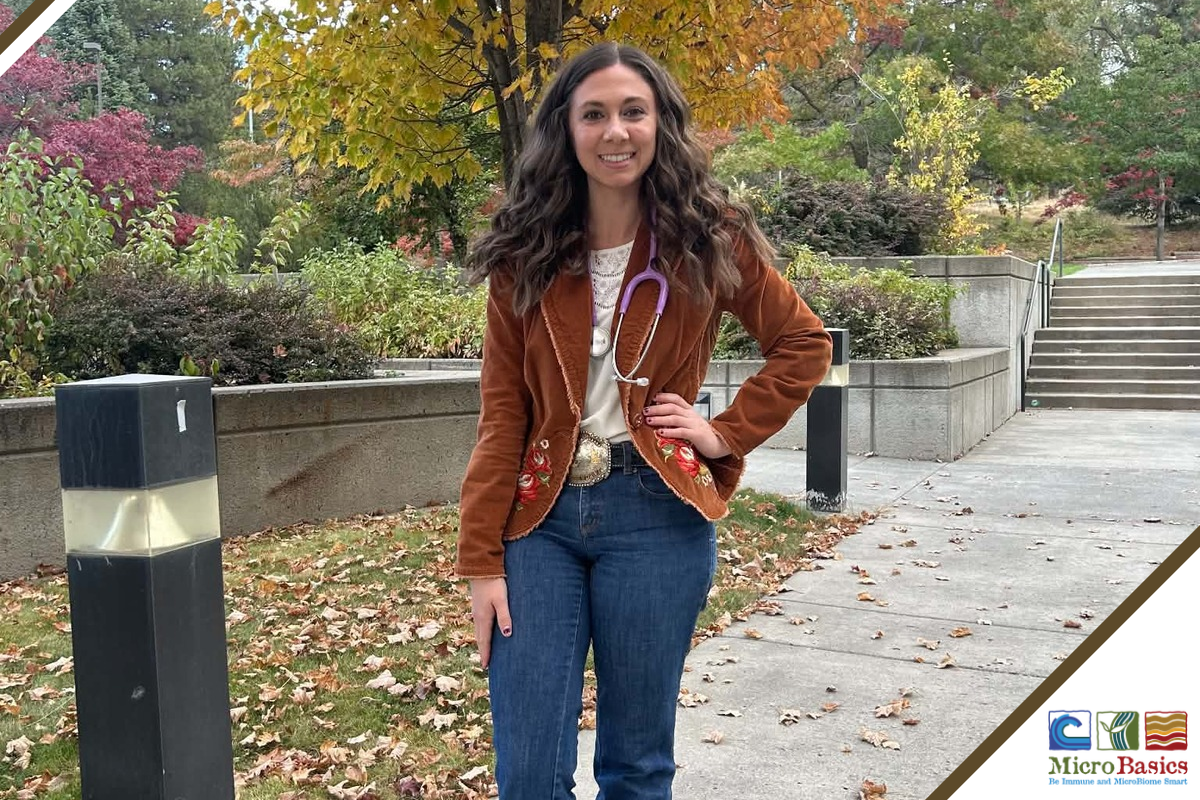
I have known Kaitlin Mirkin for roughly half of her life. She grew up on a small dairy farm in Jerome, Idaho. I got to know her while I was doing some nutrition work for her father. It has been fun to watch her grow up from a 4-H kid to an accomplished adult. Kaitlin is now in the final stretch of veterinary school at Washington State University.
A Dairy Kid's Road to Veterinary Medicine
Kaitlin grew up showing cattle raised on her family's dairy and her horses in 4-H. She also enjoyed sewing and knitting projects along the way. Through Jerome FFA, she competed in public speaking and dug into forestry and dairy foods contests. Agriculture has been part of her life for as long as she can remember.
Kaitlin didn't always plan to be a veterinarian. She always knew she wanted a career connected to agriculture and her first career plan was to become a nutritionist. But partway through her undergraduate studies at the University of Idaho, she was drawn more towards veterinary medicine.
She felt a career in veterinary medicine was a way to combine everything she cared about: science, creative problem-solving, and service to her community. Kaitlin wanted work that would keep her learning and let her make a difference — and veterinary medicine offered all of it.
Her undergrad coursework turned out to be excellent preparation. A large-animal nutrition course gave her a foundation in how nutritional imbalances show up clinically, something useful in both small- and large-animal medicine. And her large-animal theriogenology and reproduction classes covered many of things she might deal with in livestock production. These classes provided her a strong background that she was grateful to carry into veterinary school.
Imposter Syndrome and the Fire Hose
If you ask Kaitlin what the hardest part of vet school has been, she'll point to imposter syndrome — the thread connecting the most difficult stretches of the whole experience. "The volume of material," she says, "feels like being fed through a fire hose. It is easy to compare yourself to classmates and feel like they are all getting it when you aren’t. It’s challenging to keep up with a heavy course load and still have some kind of work-life balance. It is easy to feel like everyone else has it figured out, except you."
Kaitlin mentioned something that helped her through these tough times, and that was the closeness and comradery that she and the other vet students shared. It turned out that many of her classmates admitted to the many of the same feelings. Shared honesty, and their support for one another, has helped her manage the self-doubt. She doesn't think anyone ever completely gets over it — and maybe that's okay, because it comes from wanting to do the best possible work for patients.
Kaitlin named three big highlights from her time in vet school: working with live animals, simulated diagnostic cases, and an ambulatory rotation.
Her favorite story came while shadowing in the ag animal department, where she observed a case she never expected — a camel. The animal came in with upper respiratory signs, and the team ultrasounded its lungs. Kaitlin suspected they were thinking pneumonia, but she had to leave for class before they reached a diagnosis. She remembers the camel as an older animal, retired from a petting zoo, and she was struck first by just how big it was. What she took away from those couple of hours, though, was watching students and clinicians work creatively and collaboratively — second-year students like her contributing what they'd learned, fourth-year students adding their experience, and clinicians adapting their approach to a species most of them don't see every day.
As it happens, one of her reproduction courses even included a section on camels and camelids — llamas and alpacas included. Kaitlin loved learning about these less familiar species. An although she grew up around cattle Kaitlin developed a love for small and exotic ruminants during her schooling.
The Diagnostic Challenge: Playing Veterinarian for a Week
One of the traditions at WSU is the diagnostic challenge, and Kaitlin described it as a chance for lower classmen to act as doctors for a couple of weeks. Students take time away from regular classes, trained community members play the clients, and cases are written by upperclassmen.
Kaitlin wrote one of the cases herself — a dairy farm with decreased production, where students worked through mastitis testing, bulk-tank samples, and writing a health certificate. (A dairy case, naturally. Once a dairy kid, always a dairy kid.) She also worked through two cases involving goats and an alpaca, species students often don't get to handle directly in veterinary school.
What she loved most about this opportunity was the decision-making: making the calls herself and watching how the outcomes changed based on what the students chose to do. That's the part of the job no textbook can quite teach.
The highlight that most closely matches the career path Kaitlin wants to take was her recent two-week rotation with WSU's agricultural ambulatory service. Farm calls, clients, and medicine out of the back of a veterinary truck — exactly the kind of work she hopes to do.
She couldn't say enough good things about the clinician, Dr. Alyssa Marre, and honestly, listening to Kaitlin describe her felt like a lesson in what makes a great large-animal vet. Even brand-new clients had heard good things about Dr. Marre and were glad to see her pull in. Kaitlin admired how she gathered concise histories without rapidly firing questions at clients, and how creatively she worked through problems in the field, where you don't always have the luxury of a full clinic behind you.
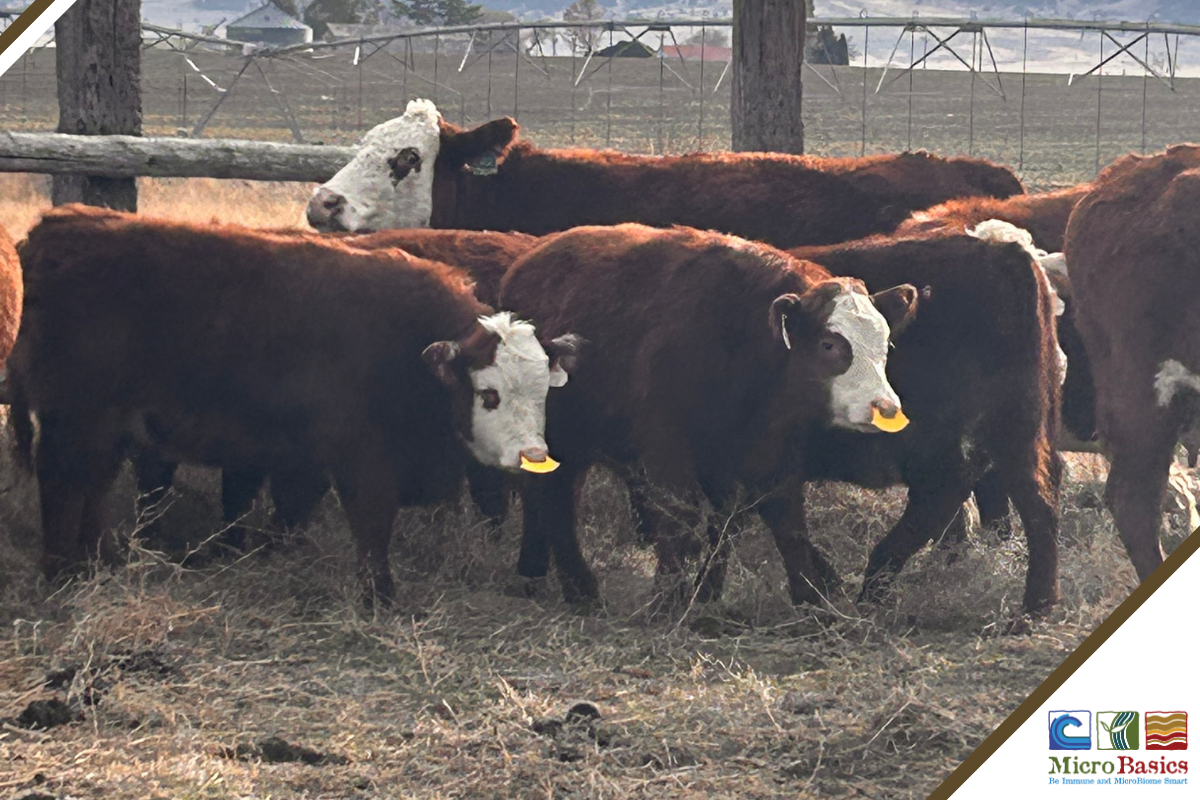
Kaitlin's ideal job is primarily large-animal medicine — a mix of food-animal species with some equine work on the side. She is open to mixed practice, but if the right large-animal position comes along, that's where her heart is. She grew up with dairy cattle, has learned beef cattle in school, and has developed a real interest in small ruminants.
Currently Kailtin is on the job search, applying and interviewing with mixed bovine, equine, and large-animal practices. She hopes to have a decision by December or January.
The truth is, Kaitlin brings exactly what large-animal practice needs: adaptability, strong client communication, and a deep agricultural background that can't be taught in a classroom. Kaitlin, we wish you God-speed to the finish and know you will be an amazing asset to the veterinary community!
Written by: Mariah Gull, M.S.

Leave a comment
All comments are moderated before being published.
This site is protected by hCaptcha and the hCaptcha Privacy Policy and Terms of Service apply.